
 E-mail:lizhi@pxball.cn
Understanding the strength and quality of inert alumina ceramic balls is crucial to ensure they can operate safely and efficiently in industrial reactors. Below is a detailed explanation of the consequences of poor strength and the standard methods used to evaluate ceramic ball quality.
1. What Happens If Inert Alumina Ceramic Balls Have Poor Strength?
If inert alumina ceramic balls fail to meet strength requirements, they may cause a series of severe problems during operation. These issues directly affect reactor safety, catalyst lifetime, equipment stability, and overall production efficiency.
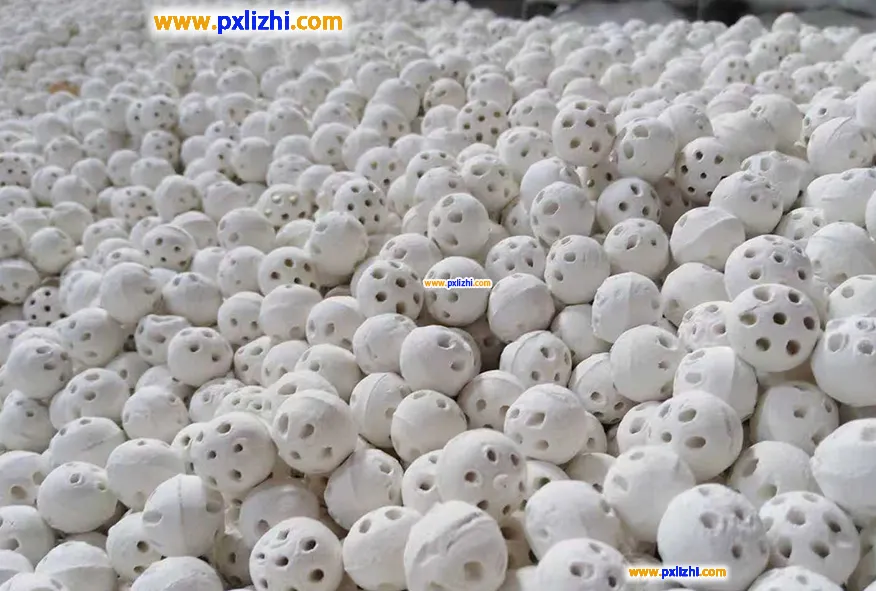
1. Catalyst Support Failure and Catalyst Damage
Low-strength ceramic balls break easily under catalyst load or fluid impact, resulting in failure of their core functions. This leads to multiple consequences:
• Risk of Catalyst Bed Collapse
When support balls at the bottom break, the bed structure becomes unstable. Catalysts may collapse or agglomerate, creating uneven voids and causing channeling or bypassing. Large areas of catalyst may no longer contact the reactants, reducing conversion rates.
• Accelerated Catalyst Wear
Broken ceramic fragments move with the fluid and collide with catalyst particles. This increases catalyst attrition, forming catalyst fines that:
- reduce catalyst activity,
- block catalyst pores,
- worsen reaction performance.
• Catalyst Loss at the Reactor Outlet
Top-layer ceramic balls with poor strength cannot protect the catalyst from inlet flow impact. Catalysts may be blown out of the reactor, increasing consumption and clogging downstream equipment.
2. Fluid Maldistribution and Reduced Production Efficiency
When ceramic balls break, the bed void structure is destroyed, and fluid distribution becomes unstable.
• Short-Circuiting and Local Overpressure
Irregular fragments form random flow passages, allowing fluids to bypass the catalyst (short-circuiting). Meanwhile, accumulated debris creates blockages and local pressure buildup. This causes pressure fluctuations and operational instability.
• Poor Reaction or Separation Performance
In distillation and absorption columns, broken balls fail to support packing or distribute vapor-liquid phases properly. This results in:
- insufficient mass transfer,
- reduced separation efficiency,
- lower product purity.
In refining applications, this may cause incomplete separation of light and heavy components.
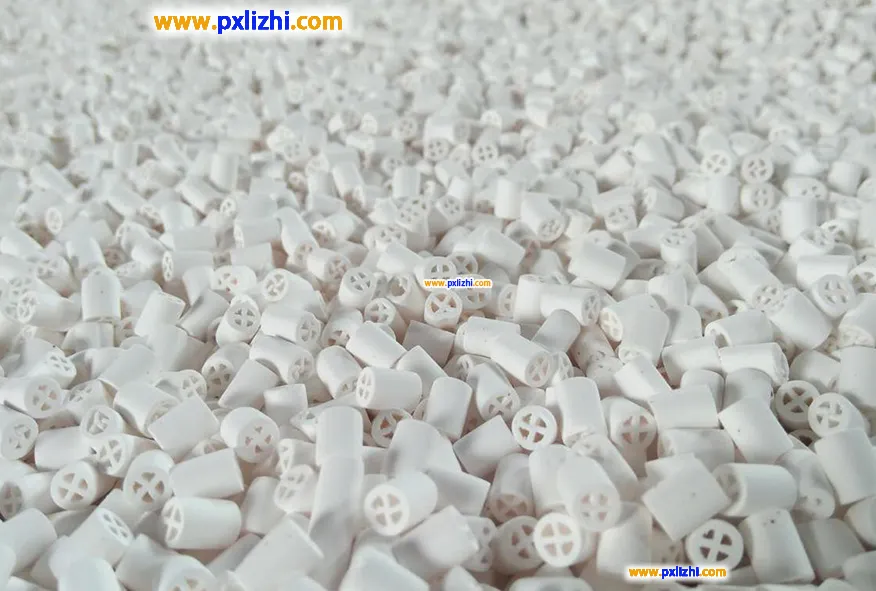
3. Equipment Blockage, Wear, and Higher Maintenance Costs
Fragments from broken ceramic balls flow through the system and damage equipment.
• Blockage of Pipes and Equipment
Small fragments accumulate in:
- heat exchanger tubes,
- pump inlets,
- valve cores,
- narrow pipelines.
This reduces flow, lowers heat transfer efficiency, and requires frequent cleaning.
• Accelerated Mechanical Wear
Ceramic debris erodes pump impellers, compressor blades, reactor internals (distributors, collectors), and other components. This shortens equipment lifetime and worsens fluid distribution.
• Increased Operational and Maintenance Costs
Frequent shutdowns, cleaning, equipment replacement, and ceramic ball replenishment significantly raise O&M costs, while production interruptions lead to major economic losses.
4. Process Instability and Safety Risks
In high-temperature, high-pressure, and corrosive environments, poor-strength ceramic balls may create serious safety hazards.
• Temperature Runaway Risks
In exothermic reactions, broken balls cause bed collapse, creating hot spots. Since broken balls conduct heat poorly, local temperatures rise rapidly, leading to catalyst sintering, deactivation, and potential reaction runaway.
• Equipment Overpressure Risks
Blockages caused by fragments create localized pressure buildup. If not detected in time, the pressure may exceed design limits, causing equipment deformation, leakage, or even explosions.
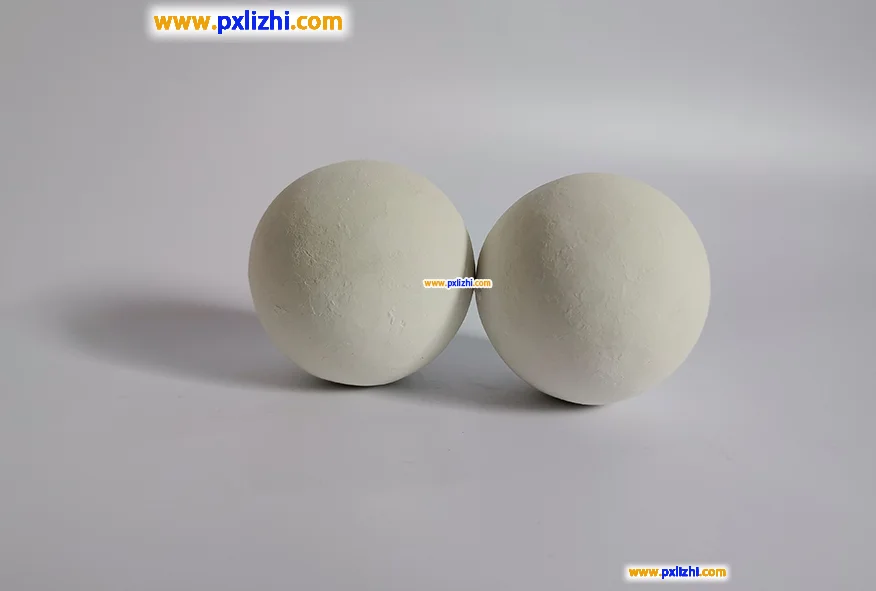
2. How to Test the Quality of Inert Ceramic Balls?
Quality evaluation includes mechanical performance, physical and chemical stability, size accuracy, and appearance inspection. The main testing items are as follows:
1. Mechanical Performance Testing (Strength & Durability)
Mechanical strength determines the ceramic ball’s ability to support catalysts and resist fluid impact.
• Compressive Strength Test
A pressure testing machine applies axial force until the ball breaks. Typical requirements:
- 10 mm ceramic balls ≥ 8 MPa
- 25 mm ceramic balls ≥ 6 MPa
(Values may vary according to industry standards.)
• Wear Rate Test
Using a tumbling or airflow wear tester, the weight loss after simulated friction is measured.
- Wear rate should be ≤ 0.2%.
• Impact Resistance Test
Ceramic balls are dropped from a specified height (e.g., 1 meter) multiple times. Their breakage or residual strength is evaluated.
2. Physical & Chemical Performance Testing
These tests assess compatibility with operational environments.
• Chemical Stability Test
Ceramic balls are soaked in acid, alkali, or solvents at elevated temperatures (e.g., 80°C for 24 hours).
- Weight loss ≤ 0.5%
- No cracks or corrosion
• High-Temperature Resistance Test
Balls are heated (e.g., 600–1000°C) and evaluated for:
- integrity,
- deformation,
- residual strength.
High-quality balls retain ≥ 90% strength after heating.
• Porosity & Density Test
- Porous balls: 20–40% porosity
- Solid balls: density ≥ 2.3 g/cm³
• Thermal Shock Resistance Test
Balls undergo rapid temperature changes between hot (e.g., 500°C) and cold (25°C) environments to check for cracking.
3. Appearance & Dimensional Accuracy Testing
Uniform size ensures smooth fluid distribution.
• Size Deviation
Measured using calipers with sampling of ≥ 50 pieces.
- Typical tolerance for 10 mm balls: ±0.5 mm
• Visual Defect Inspection
Check for cracks, chips, pits, impurities.
- Crack length ≤ 2 mm
- Defective balls ≤ 3%
• Roundness Test
Roundness deviation should be ≤ 0.8 mm to maintain uniform packing.
4. Additional Specialized Tests (For Special Industries)
• Impurity Content Analysis
Food and pharmaceutical industries require low heavy-metal content (Pb, Hg, As).
• Strength Uniformity Test
Standard deviation of compressive strength should be ≤ 10% for high-pressure reactors.
• Fluid Resistance Test
Simulated bed tests measure pressure drop to ensure compliance with design requirements.
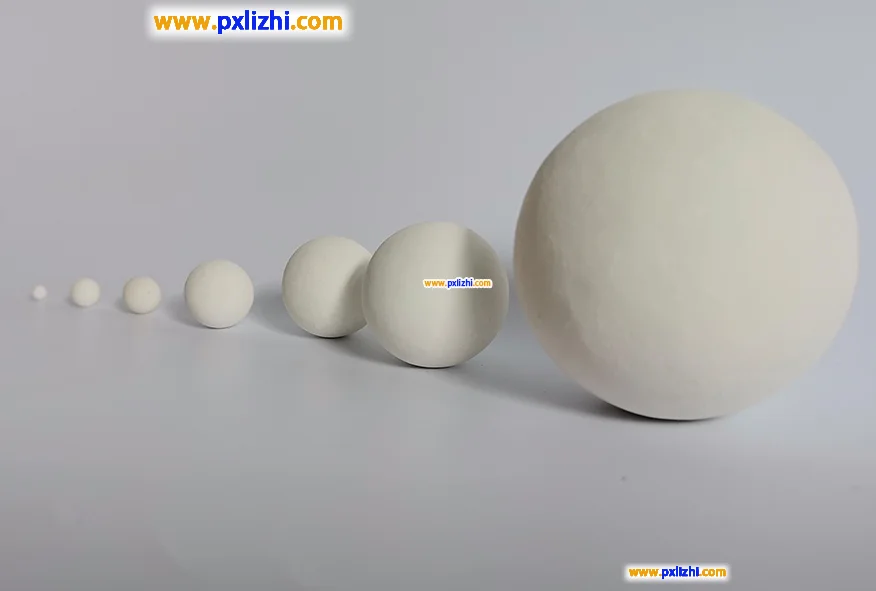
Applicable Standards
Testing methods generally follow:
- HG/T 3683 — Industrial Ceramic Balls (China)
- ASTM International Standards
- Equipment manufacturer specifications.