
 E-mail:lizhi@pxball.cn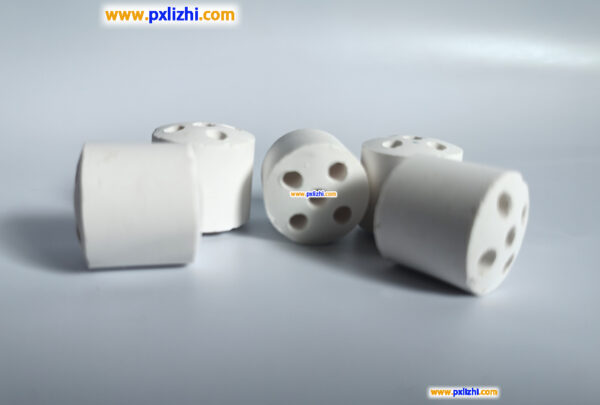
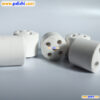
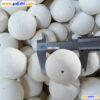
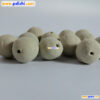
What Are Catalyst Support Ceramic Balls?
Catalyst support ceramic balls are essential industrial materials widely used in petrochemical processing, environmental protection, and new energy industries. Thanks to their excellent high-temperature resistance, high-pressure tolerance, strong chemical stability, and superior mechanical strength, they have become indispensable catalyst carrier materials in modern reactors.
The primary function of catalyst support ceramic balls is to provide a stable and reliable working environment for catalysts:
-
On one hand, they offer physical support to protect relatively fragile active catalysts, preventing catalyst loss and breakage caused by fluid impact.
-
On the other hand, they optimize gas and liquid distribution, improving reaction efficiency while significantly extending catalyst service life.
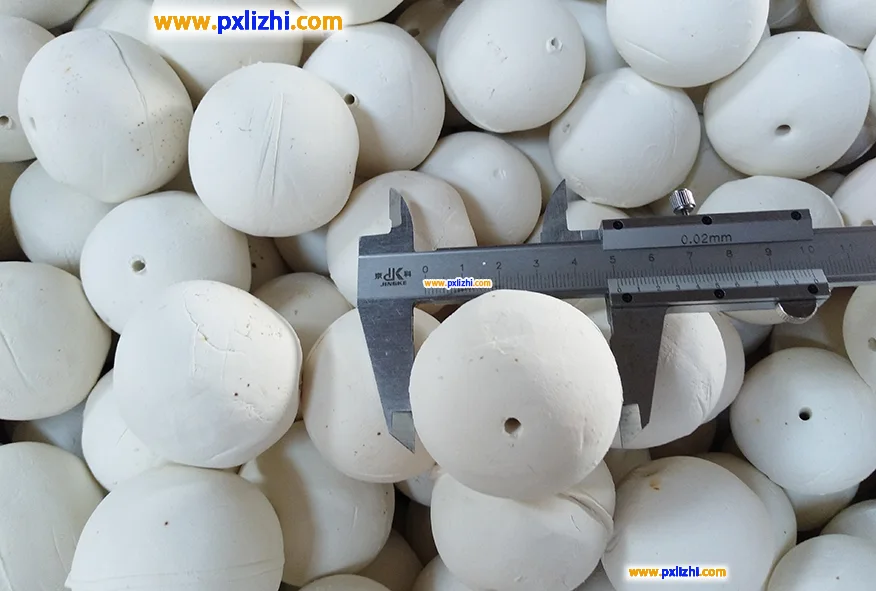
Catalyst Support Ceramic Balls
Main Types of Catalyst Carrier Ceramic Balls
1. Inert Alumina Ceramic Balls
Inert alumina ceramic balls are the most widely used and market-dominant catalyst support materials. Based on Al₂O₃ content, they can be classified into:
-
Normal ceramic balls (low Al₂O₃ content)
-
Medium alumina ceramic balls (70%–90% Al₂O₃)
-
High alumina ceramic balls (92%–95% Al₂O₃)
-
99% high alumina ceramic balls (Al₂O₃ > 99%)
Among them, 99% high alumina ceramic balls offer the highest chemical stability, with SiO₂ content < 0.3% and Fe₂O₃ < 0.1%. Their maximum operating temperature exceeds 1200°C, making them ideal for high-temperature and high-pressure reaction systems.
2. Functional Ceramic Balls
Functional ceramic balls are designed to enhance mass transfer and filtration performance, including:
-
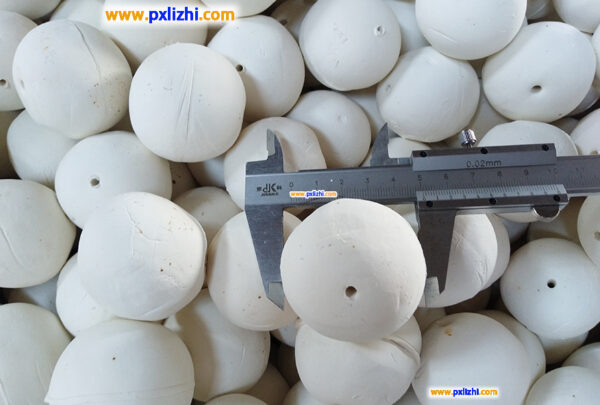
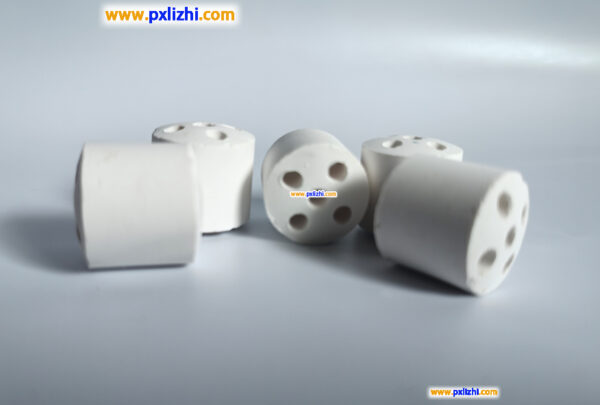
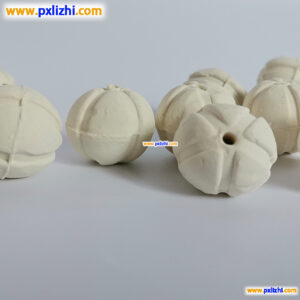
Grooved and perforated ceramic balls
-
Microporous ceramic balls
-
Activated ceramic balls
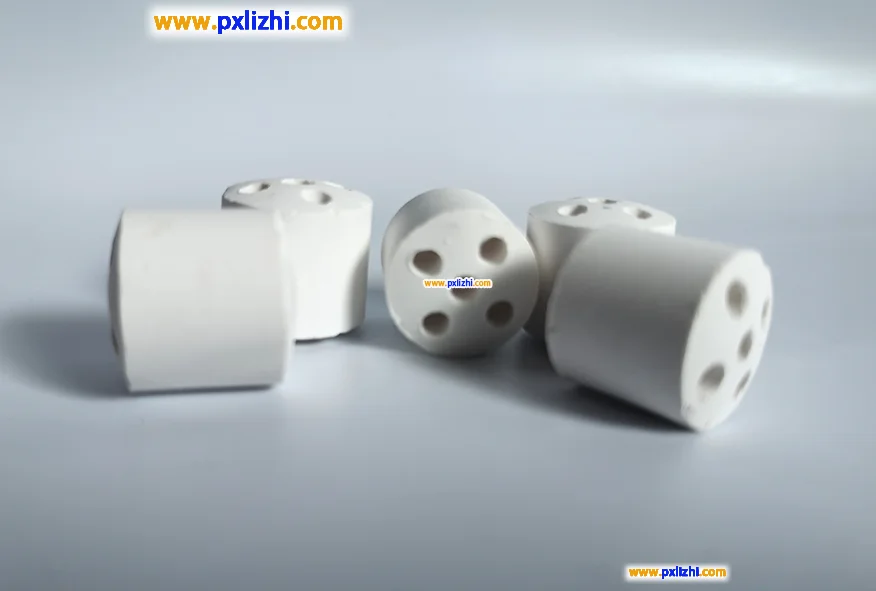
Perforated ceramic balls feature a special structural design that increases void fraction to over 33% and improves specific surface area by approximately 40%, effectively reducing system pressure drop.
Microporous ceramic balls typically have a porosity of 20%–30% and achieve an impurity removal efficiency exceeding 75%, making them widely used in hydrotreating and hydrogenation refining units.
Key Features and Advantages of Catalyst Support Ceramic Balls
1. High Specific Surface Area and Adjustable Pore Structure
Ceramic balls manufactured using advanced processes develop a complex internal pore network with a high specific surface area. This structure provides sufficient space for loading active catalytic components and creates efficient diffusion pathways for reactants and products.
The pore size distribution can be precisely tailored to meet different catalytic reaction requirements, ensuring optimal mass transfer efficiency.
2. Outstanding Thermal Stability and Chemical Inertness
Made from high-purity materials such as alumina, silica, and zirconia, catalyst carrier ceramic balls can withstand extreme operating temperatures (typically above 1000°C) without sintering or structural collapse.
Their excellent chemical inertness ensures long-term stability in corrosive and reactive environments, maintaining catalyst purity and consistent performance.
3. Superior Mechanical Strength and Wear Resistance
In fluidized beds and moving-bed reactors, catalyst carriers experience continuous collision and abrasion. High-strength ceramic balls effectively resist breakage and wear, minimizing dust formation, extending catalyst life, and reducing maintenance costs.
4. Uniform Shape and Size Distribution
The standard spherical shape and consistent particle size help achieve uniform fluid distribution and stable pressure drop within the reactor. This prevents channeling and dead zones, ensuring smooth and controllable reaction processes.
Main Application Areas
Petrochemical Industry
Catalyst support ceramic balls are widely used in hydrotreating, catalytic cracking, and olefin polymerization processes, improving product quality and operational efficiency.
Environmental Protection
They serve as catalyst carriers in automotive exhaust purification, industrial VOCs and NOx catalytic combustion, and flue gas desulfurization and denitrification systems, contributing to cleaner air and emission reduction.
Selection Guide and Purchasing Considerations
When selecting catalyst support ceramic balls, it is essential to match operating conditions and catalyst characteristics. Key factors include:
Material Selection
-
Acidic environments: High alumina ceramic balls are recommended
-
High-temperature conditions (>1000°C): 99% high alumina or silicon nitride ceramic balls
-
Strongly corrosive environments: Silicon carbide composite ceramic balls
Particle Size and Strength
-
Ceramic ball diameter should be 2–5 mm larger than catalyst particles to prevent bed blockage
-
Compressive strength should meet reactor pressure requirements; ≥150 MPa is recommended for high-pressure systems
Structural Design
-
For high-throughput systems, choose grooved or perforated ceramic balls with void fraction ≥30%
-
For filtration applications, microporous ceramic balls are preferred to ensure effective impurity removal
-
Technical Parameter:
-
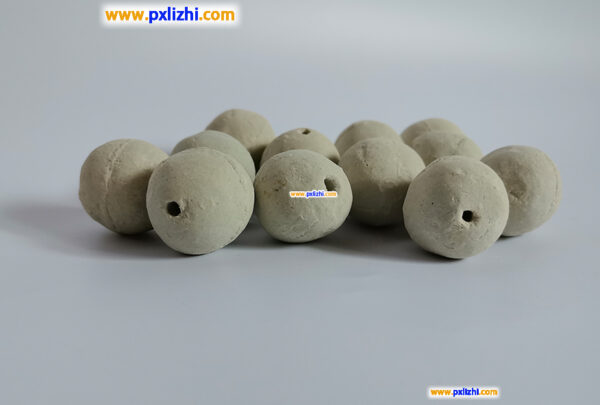
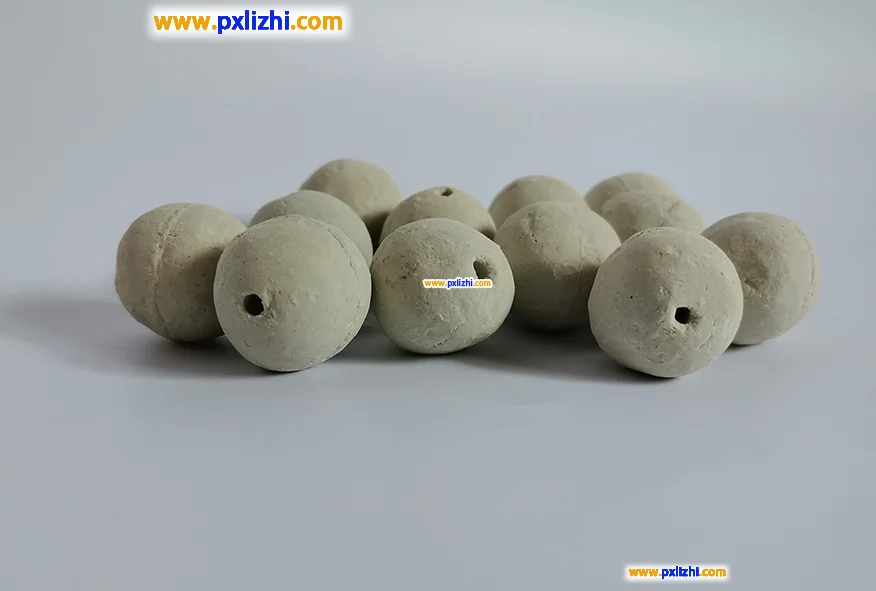
Model: Inert Ceramic Ball Color: Light Grey Shape: Ball Typical Technical Composition Min. % Max. % Usual % SiO2 64 75 68.5 Al2O3 23 26 24.5 Fe2O3 ****** 1.0 0.9 TiO2 ****** 0.5 0.46 CaO ****** 0.5 0.42 MgO ****** 0.5 0.38 Na2O ****** 2 1.12 K2O ****** 3.5 3.28 Al2O3 + SiO2 90 94 93 Physical properties Index Value Value Leachable Iron ≤ 0.1% ****** Apparent Porosity by Weight, dia. ≥ 10mm ≤ 0.4% ****** Apparent Porosity by Weight, dia. = 6mm ≤ 1.0% ****** Apparent Porosity by Weight, dia. = 3mm ≤ 3.0% ****** Moh’s Hardness Scale >6.5 ****** Water Absorption <0.5wt.% ****** Acid Resistance >99.8% ****** Alkaline Resistance >85% ****** Thermal Conductivity 0.9-1.0 w/m2.k ****** Thermal Expansion @ 500℃ 0.20% ****** Specific Heat 628-837 j/kg ****** Thermal Shock Stability, 500 ℃ then water cooling 10 times ****** Max. Operating Temperature 1050℃ 1922 Specific Density 2300 kg/m3 144 lb/ft3 Bulk Density (Packing Density) 1350 kg/m3 84 lb/ft3 Size / Crush Strength Nominal Size (lbs) (kg) (N/pc) mm Inch min. min. min. 3 1/8 84 38 372 6 1/4 209 95 931 10 3/8 282 128 1254 13 1/2 616 280 2744 16 5/8 770 350 3430 19 3/4 1738 790 7742 25 1 1936 880 8624 38 1.5 2156 980 9604 50 2 3564 1620 15876 Typical Application a)Widely used support media in the world because of their excellent consistence and reliability. b)Manufactured from very high quality chemical-porcelain clay materials, which has quite excellent stability, high mechanical strength and resistance to thermal shock, This makes them all ideal choice for support of all types of catalyst.
Warranty: a) By National Standard HG/T 3683.1-2000
b) Offer lifetime consultation on problems occurred

Reviews
There are no reviews yet.