
 E-mail:lizhi@pxball.cn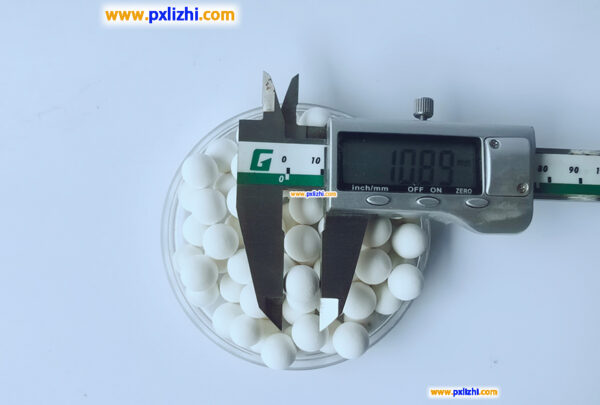

Core Concept
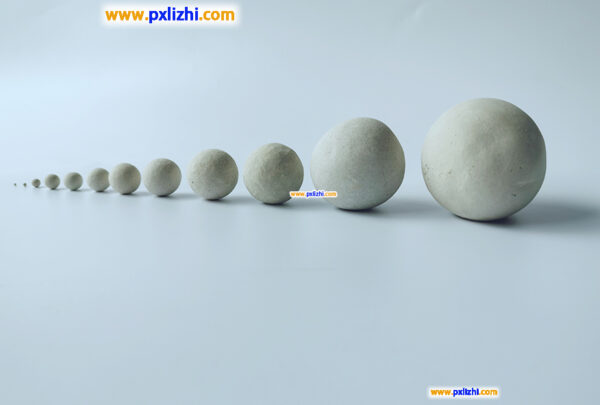
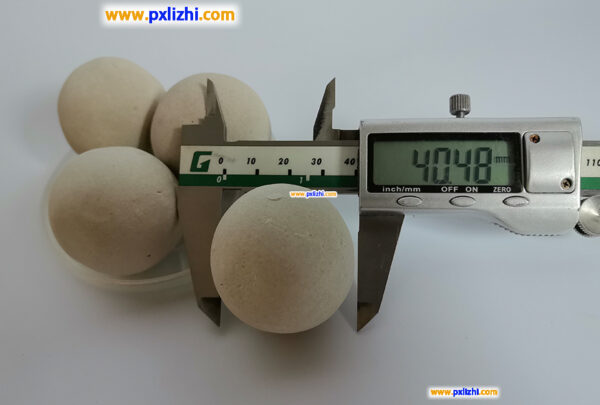
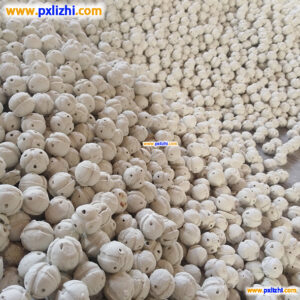
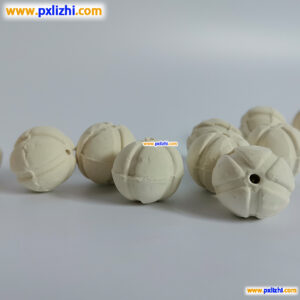
Ceramic catalyst support balls, also known as inert ceramic balls or catalyst carriers, serve primarily as physical support structures for catalytic materials. They are not directly involved in the catalytic reaction itself but provide a stable, high surface area “platform” or “skeleton” for catalytically active substances like precious metals, metal oxides, etc.
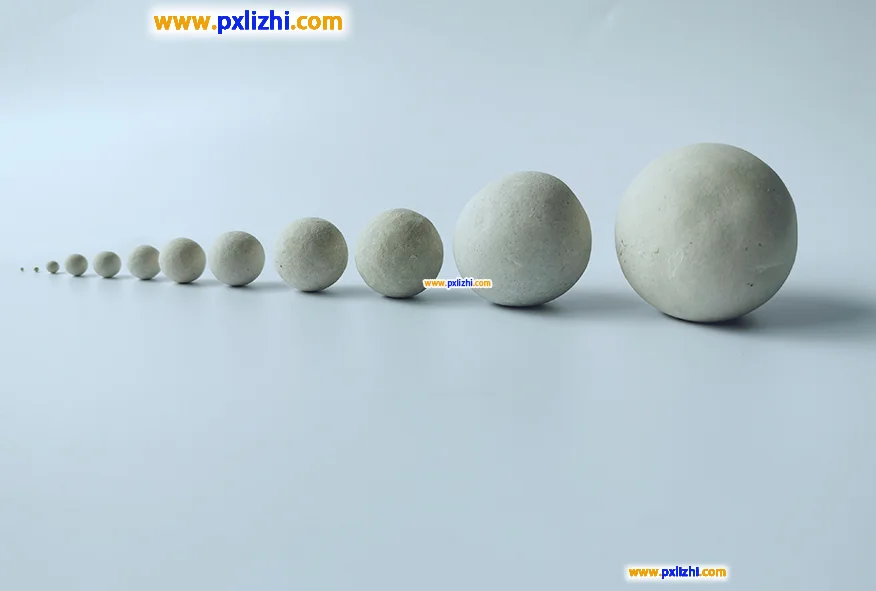
Main Functions and Characteristics
-
Stable Support for Catalysts to Prevent Deactivation
Catalysts are often in particle or powder form with relatively low density, making them susceptible to settling and stacking under high fluid (gas or liquid) flow conditions. Support balls are placed at the bottom of reactors or between catalyst layers, providing uniform support for the catalysts through their stable physical structure, thus preventing deactivation caused by gravity settling or fluid impact. -
Material and Gas Flow Distribution to Enhance Reaction Efficiency
The support balls, through proper size matching, create ordered flow channels inside reactors, effectively dispersing the incoming fluid velocity and material distribution. This prevents the “channeling” effect, ensuring that the materials and catalysts come into full contact and significantly improving reaction conversion rates. -
Wear Resistance to Extend Catalyst Life
In industrial reactions, high-speed fluid flow carrying impurities or materials can cause catalyst wear and pulverization. Pulverized catalysts lose their activity and can block pipelines, leading to product contamination. Ceramic catalyst support balls, due to their high hardness and excellent wear resistance, protect the catalyst from fluid impacts, reducing wear and extending the catalyst’s lifespan. -
Protecting Equipment and Reducing Maintenance Costs
The support balls protect catalysts and prevent catalyst pulverization from damaging the reactor’s walls, pipeline, and valves. Their high-temperature and corrosion-resistant properties allow them to withstand harsh reaction environments, reducing equipment failure frequency and lowering maintenance costs.
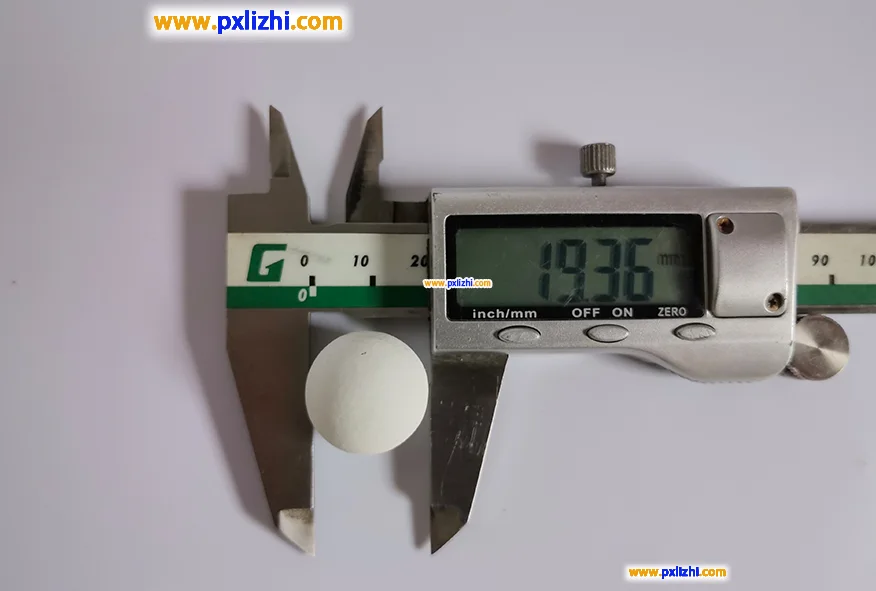
Selection Guide for Ceramic Catalyst Support Balls
-
Working Conditions
Pay attention to reaction temperature, pressure, and material corrosiveness. For high-temperature conditions (above 800°C), such as petroleum cracking or denitrification reactions, select high-alumina or corundum-based support balls. For high-pressure environments (above 10 MPa), prioritize support balls with high compressive strength. In highly acidic or alkaline environments, choose ceramic support balls with low water absorption and high density. -
Catalyst Compatibility
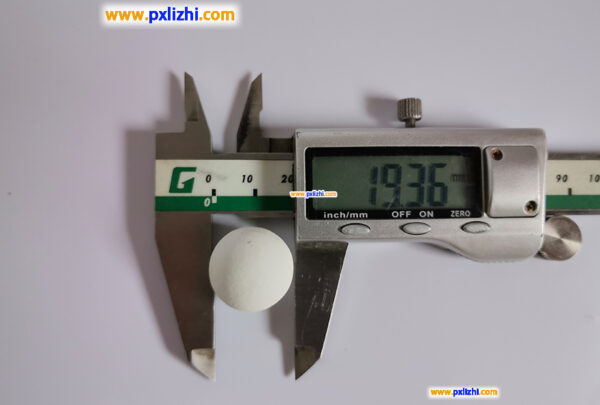
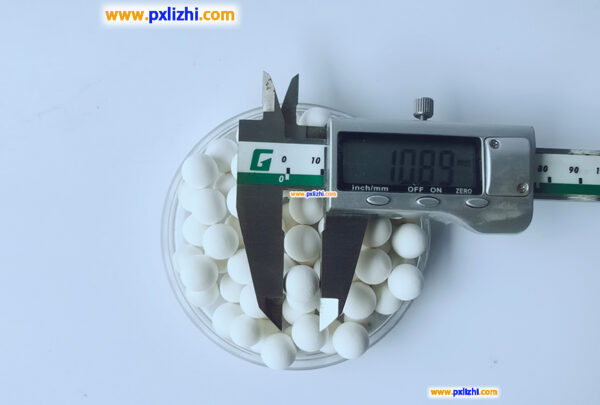
The particle size of the support balls should match that of the catalyst, typically 3-5 times the size of the catalyst particles. This ensures stability while allowing for efficient material flow. Additionally, choose support balls with a stacking density corresponding to that of the catalyst to avoid misalignment due to density differences. -
Equipment Requirements
Based on the reactor’s diameter, height, and feed method, determine the thickness and layering scheme of the support balls. For large reactors, the bottom support layer should be at least 500mm thick, and a layered placement scheme with “large + medium + small” particle sizes is recommended. -
Alumina Content
The alumina content directly affects the support ball’s high-temperature and wear-resistant properties. The higher the alumina content, the better the performance. High-alumina support balls contain ≥75% alumina, while corundum-based support balls contain ≥95%. -
Compressive Strength
Standard support balls have a compressive strength of ≥100 MPa, high-alumina support balls have ≥150 MPa, and for high-pressure conditions, choose products with a compressive strength of ≥200 MPa. -
Water Absorption Rate
High-quality support balls should have a water absorption rate ≤0.5%. The lower the water absorption, the stronger the corrosion resistance and longer the service life. -
Appearance Quality
The surface should be smooth, free of cracks or impurities, and the particle size deviation should be ≤ ±5% to avoid defects that affect stability.
Application Fields
-
Petrochemical Industry
Used in catalytic cracking units, hydrogenation reactors, reforming reactors, etc., to support catalytic cracking catalysts, hydrogenation catalysts, etc. -
Coal Chemical Industry
Used in methanol synthesis reactors, coal-to-olefins units, coke desulfurization towers, etc., supporting methanol synthesis catalysts and desulfurization catalysts. -
Environmental Protection Industry
Used in SCR denitrification reactors, desulfurization towers, sewage treatment oxidation ponds, etc., to support denitrification and desulfurization catalysts, improving environmental treatment efficiency. -
Fine Chemical Industry
Used in pharmaceutical synthesis reactors, dye intermediate reactors, etc., to protect fine chemical catalysts and ensure product purity.
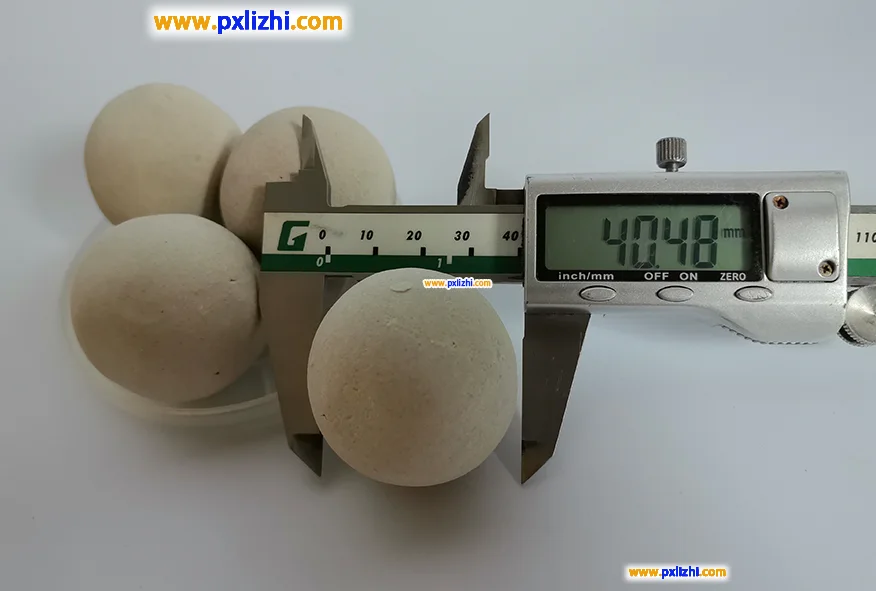
Maintenance and Replacement of Ceramic Catalyst Support Balls: 3 Key Indicators
The service life of ceramic catalyst support balls is greatly affected by working conditions. Under normal conditions, they can last 1-3 years, while under harsh conditions, they need replacement every 6-12 months. The following 3 signs indicate that the support balls should be inspected and replaced:
-
Severe Surface Wear and Powder Formation
The wear of support balls generates ceramic powder that contaminates materials, clogs pipelines, and reduces catalyst activity. Immediate replacement is necessary. -
Visible Cracks or Breakage
Broken support balls can no longer provide stable support, leading to catalyst layer collapse, affecting the reaction process. -
Decreased Compressive Strength
If testing shows that the compressive strength has dropped below 50% of the original value, the support balls can no longer withstand the pressure and must be replaced in bulk.
Additionally, routine maintenance should include regular cleaning of reactor impurities to prevent increased wear on support balls. Every 6 months, inspect the appearance and performance of support balls to anticipate the replacement cycle.
Difference Between Ceramic Catalyst Support Balls and “Active Ceramic Balls”
-
Ceramic Catalyst Support Balls (Inert Carriers): These balls have no catalytic activity on their own and require active components to be loaded onto them.
-
Active Alumina Ceramic Balls: These balls have inherent adsorption or catalytic properties (such as dehydration or defluorination) and can directly participate in certain simple reactions or act as protective layers.
-
Molecular Sieves: These serve as both carriers and catalysts due to their regular pore structures and acidic sites.

Reviews
There are no reviews yet.