 E-mail:lizhi@pxball.cn
What Are the Main Chemical Components of Inert Ceramic Balls and What Roles Do They Play?
The chemical composition of inert ceramic balls directly determines their physicochemical properties, including high-temperature resistance, chemical stability, and mechanical strength. The core components are alumina (Al₂O₃) and silica (SiO₂), supplemented by small amounts of fluxing agents or modifying additives. Based on alumina content, inert ceramic balls can be classified into several types. Their typical compositions and functions are as follows:
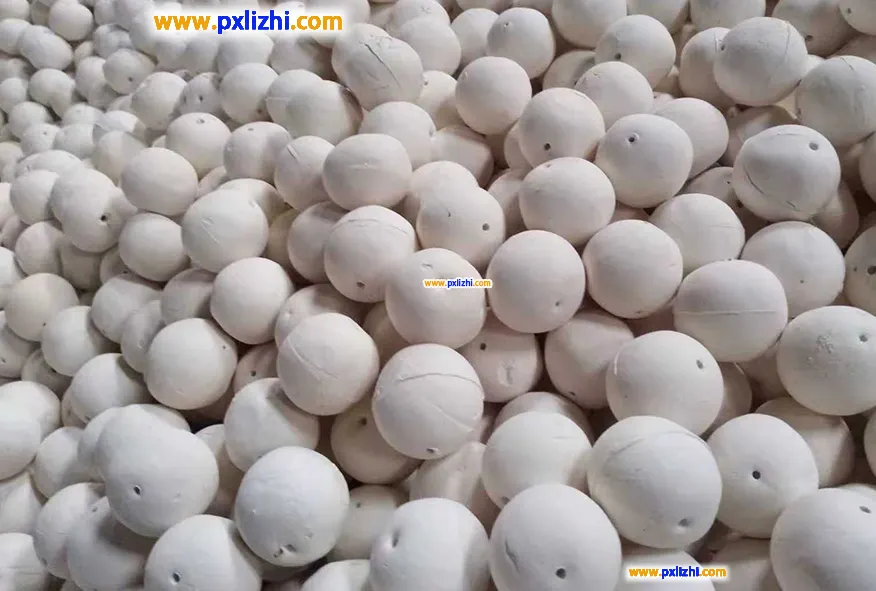
1. Regular Inert Ceramic Balls (Low-Alumina Type)
Suitable for medium/low-temperature and mildly corrosive environments such as distillation towers and wastewater treatment filters. They offer lower cost and stable performance.
Main Chemical Components
- Silica (SiO₂): 65% – 75%
Primary structural component; provides basic mechanical strength. - Alumina (Al₂O₃): 15% – 25%
Enhances strength and heat resistance. Higher content results in better performance. - Calcium Oxide (CaO) & Magnesium Oxide (MgO): 3% – 8%
Act as fluxing agents; reduce sintering temperature and improve ball density. - Iron Oxide (Fe₂O₃): ≤ 1%
Considered an impurity; excessive levels reduce chemical stability and increase corrosion risk. - Other Impurities (K₂O, Na₂O): ≤ 2%
Alkali oxides must be strictly controlled to prevent unwanted reactions at high temperatures.
2. High-Alumina Inert Ceramic Balls (Corundum-Type)
Designed for high-temperature, high-pressure, and strongly corrosive environments such as hydrotreating reactors and coal gasification units. These represent the highest-performance category.
Main Chemical Components
- Alumina (Al₂O₃): ≥ 92%
Common grades include 92%, 95%, and 99%. Higher alumina content delivers superior mechanical strength, thermal stability, and corrosion resistance. - Silica (SiO₂): ≤ 5%
A small amount of SiO₂ improves sintering performance and prevents excessive alumina grain growth, which could cause brittleness. - Sodium Oxide (Na₂O): ≤ 0.3%
Extremely low alkali content ensures excellent chemical resistance in strong acid/alkali and high-temperature environments. - Other Impurities: ≤ 0.5%
Near-high-purity composition provides exceptional stability and structural integrity.
3. Porous Inert Ceramic Balls
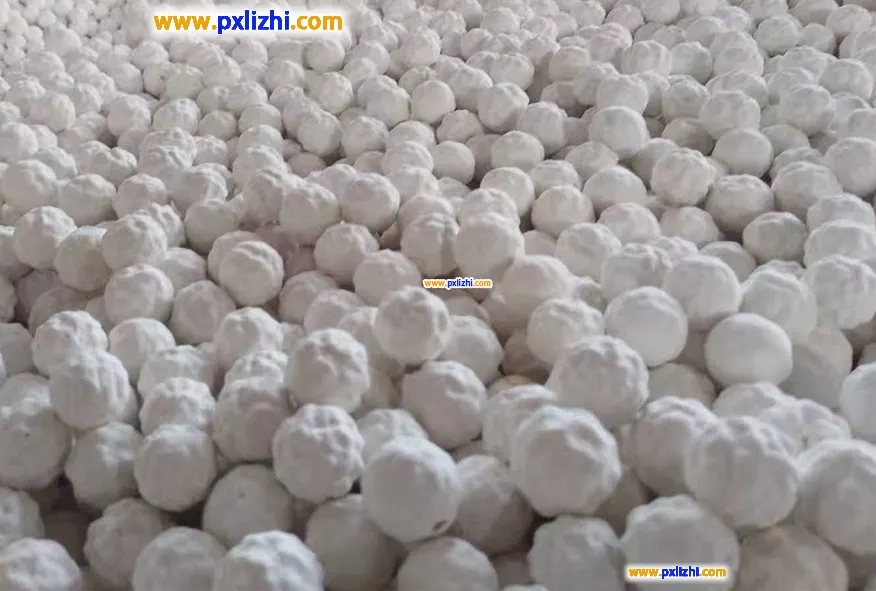
In addition to the basic ingredients, pore-forming agents (e.g., starch, activated carbon) are added. After sintering, interconnected pores form with controlled porosity (20%–40%), making them suitable for filtration or as auxiliary catalyst carriers.
How Each Component Affects Performance
Higher Alumina (Al₂O₃) Content
✔ Stronger mechanical strength (crushing & wear resistance)
✔ Higher temperature resistance
✔ Better chemical stability
✘ Higher cost
Excessive Silica (SiO₂)
✘ Reduces high-temperature resistance
✘ Softening or deformation may occur above 1000°C
High Alkali Oxides (K₂O, Na₂O)
✘ Easily leach out in high-temperature or acidic conditions
✘ Lead to surface corrosion and strength loss
High Iron Oxide or Other Impurities
✘ Reduce corrosion resistance
✘ Create sintering defects and weaken mechanical strength