 E-mail:lizhi@pxball.cn
FAQ: Everything You Need to Know About Inert Ceramic Balls
1. What are Inert Ceramic Balls?
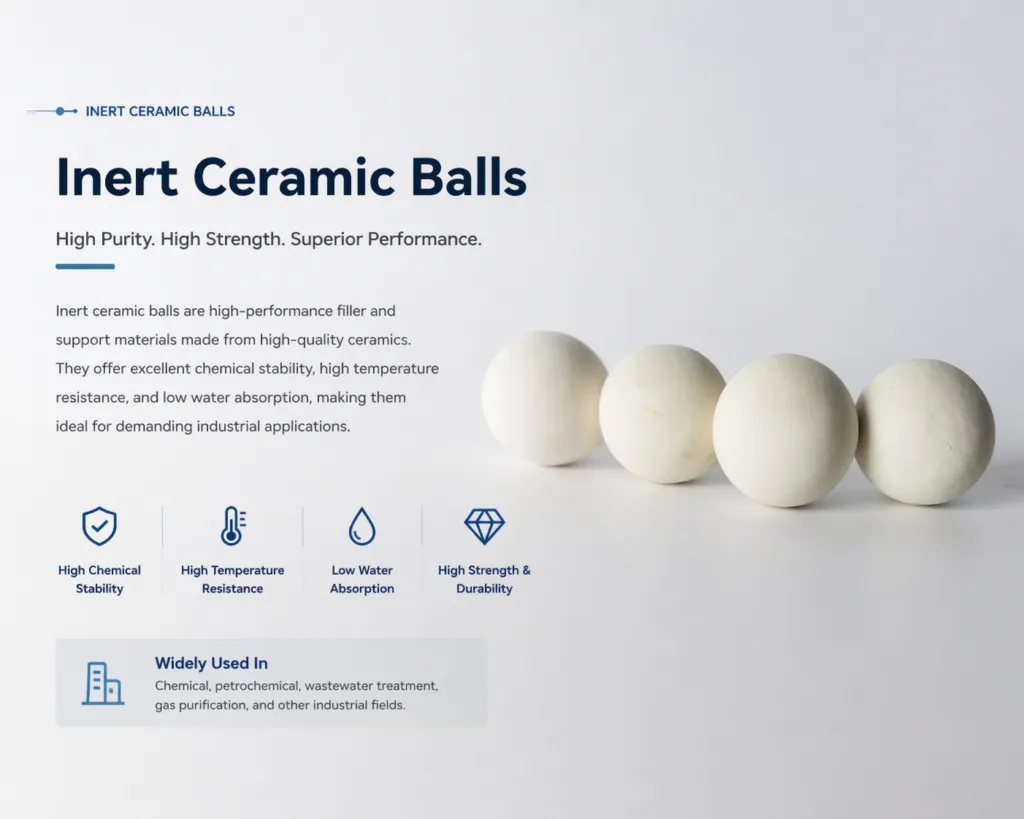
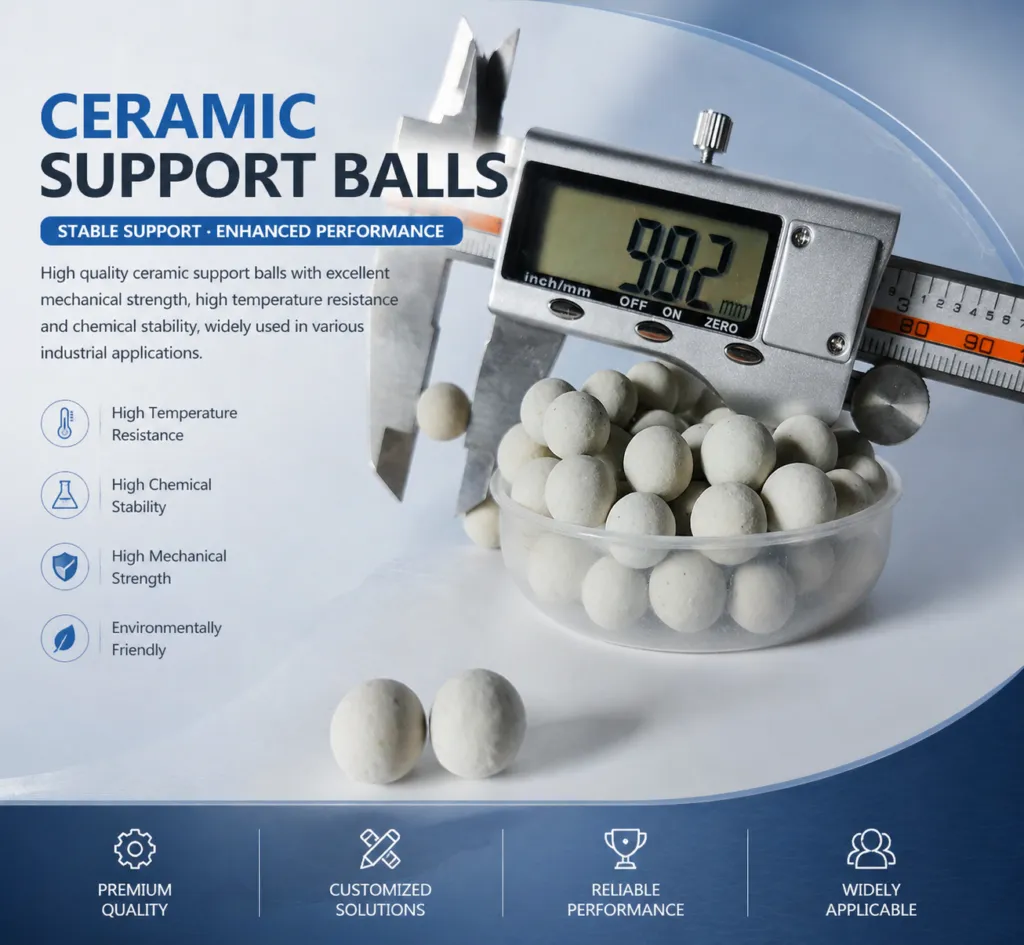
Inert ceramic balls are spherical fillers made from stable, high-temperature resistant ceramics that do not engage in chemical reactions. They are highly resistant to corrosion, have a high hardness, and are chemically inactive.
2. Where Are Inert Ceramic Balls Used?
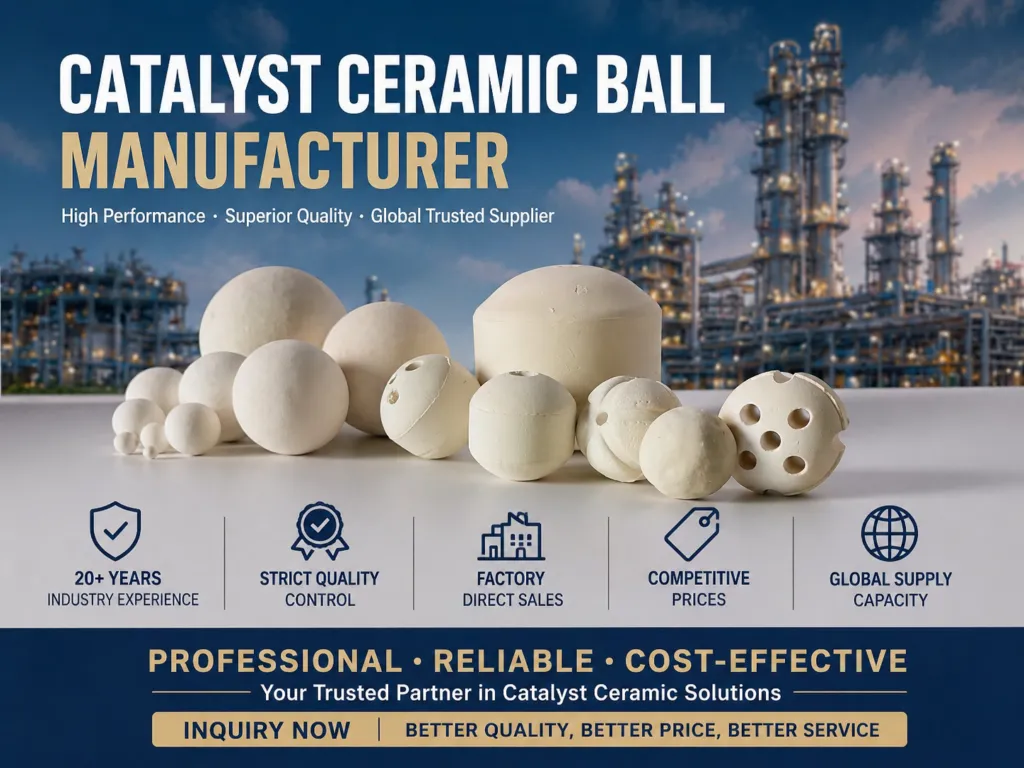
Inert ceramic balls are primarily used in equipment such as:
- Reaction Towers
- Absorption Towers
- Distillation Towers
- Drying Towers
- Reactors
- Separators
Used in chemical, petrochemical, and environmental industries, these ceramic balls play a crucial role in tower equipment.
3. What is the Role of Inert Ceramic Balls?
Inert ceramic balls serve several key functions:
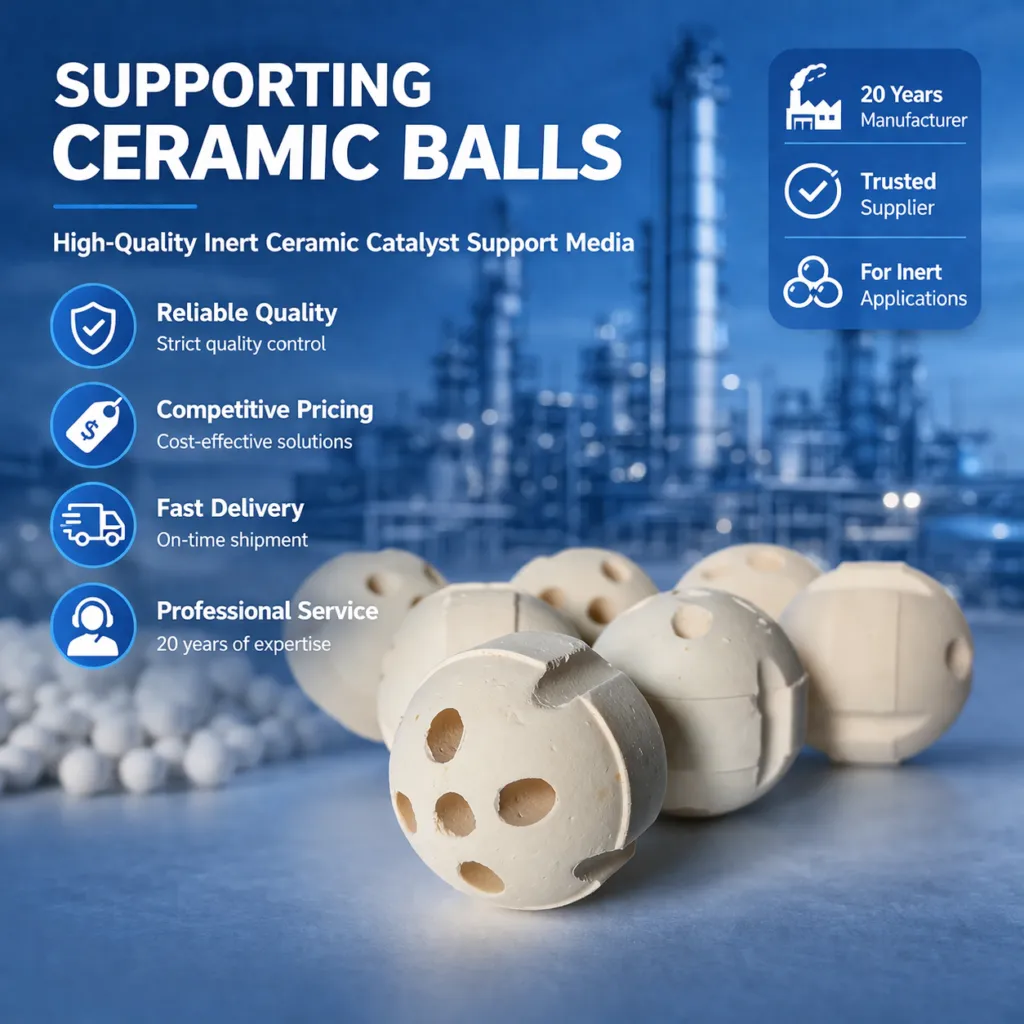
- Support lower layers of catalysts to prevent catalyst collapse or powdering.
- Uniformly distribute gas and liquid flows to stabilize operating conditions.
- Buffer fluid impact and protect catalysts and internal equipment.
- Filter small amounts of impurities, offering resistance to corrosion, high temperatures, and isolation of reaction media.
4. Why Is It Important to Clarify the Alumina (Al₂O₃) Content When Purchasing Inert Ceramic Balls?
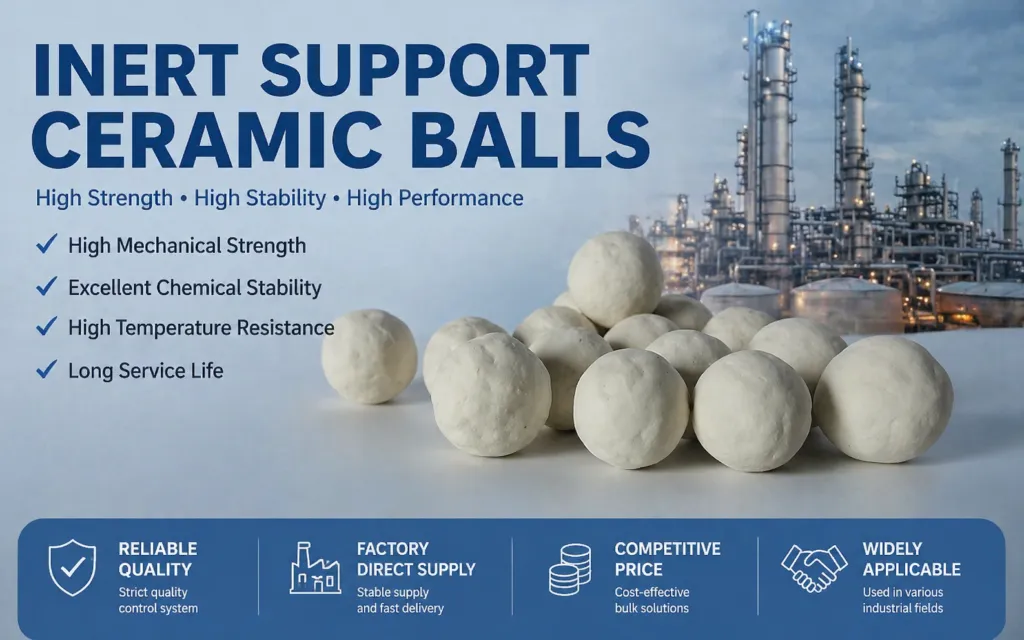
The alumina content directly influences the temperature resistance, pressure resistance, abrasion resistance, corrosion resistance, and service life of inert ceramic balls. Higher alumina content generally means better quality, better adaptability to working conditions, and a longer lifespan. It is essential to choose the appropriate specification based on the equipment and process requirements.
5. What Are the Consequences of Poor Strength in Inert Ceramic Balls?
If the strength of inert ceramic balls is insufficient, it can lead to several issues:
- Breakage and powdering of the ceramic balls.
- Clogging of tower gaps due to powder, causing increased pressure drop and poor gas flow.
- Uneven gas-liquid distribution, leading to bypass flow and reduced reaction efficiency.
- Crushed catalyst particles from broken ceramic balls, shortening catalyst lifespan.
- Clogging of pipes and packing layers, resulting in operational issues and unplanned maintenance.
6. How to Choose the Right Size and Specifications for Inert Ceramic Balls?
In selecting inert ceramic balls, consider the following factors:
- Top/Surface Layer: Choose larger sizes for buffering and flow distribution.
- Lower Layer/Catalyst Support Layer: Select smaller sizes to bear weight and support material.
- Tower Diameter: Larger towers require larger ceramic balls to avoid clogging, while smaller towers and reactors use smaller sizes.
- Matching Catalyst Particle Size: The diameter of ceramic balls should be larger than that of the catalyst particles to prevent catalyst loss.
- Pressure Drop and Ventilation: For low pressure drop and smooth ventilation, choose larger sizes. For filtering and flow stabilization, opt for smaller sizes.
- Common Sizes: 3mm, 6mm, 10mm, 13mm, 16mm, 20mm, 25mm, 30mm, 50mm. Typically, 25mm, 30mm, and 50mm are used for the bottom layer, 16mm and 20mm for middle layers, and 10mm and 13mm for top layers.
7. What Quality Factors Should Be Considered When Purchasing Inert Ceramic Balls?
Key quality factors to consider include:
- Alumina (Al₂O₃) Content: Determines temperature resistance, pressure resistance, and corrosion resistance.
- Mechanical Compressive Strength: Ensures the ceramic balls do not break or powder, preventing tower blockages.
- Temperature and Corrosion Resistance: Ensures compatibility with acidic, alkaline, or high-temperature media.
- Appearance: Should be free from cracks, chips, holes, and have a smooth, uniform surface.
- Size Tolerance: Uniform sizes ensure stable gas-liquid distribution and even void spaces.
- Water Absorption and Porosity: Lower values are preferred for better durability.
- Bulk Density and Hardness: Ensure proper load-bearing capacity without deformation.
- Manufacturing Process and Sintering Temperature: High-temperature sintering ensures strong and stable material.
- Batch Consistency: Ensure no mixing of different materials, maintaining consistent quality.
- Test Reports: Request certificates for chemical composition, strength, and other physical/chemical properties.