
 E-mail:lizhi@pxball.cn
How to Determine Whether the Strength of Inert Ceramic Balls Is Qualified?
To determine whether the strength of inert ceramic balls meets requirements, the core approach is to test key mechanical properties according to national standards, supported by visual inspection and on-site practical checks.
Different sizes and materials (such as alumina ceramic balls) have corresponding standard limits. In practice, strength qualification can be judged through three clear and easy-to-apply methods.
1. Key Mechanical Test Indicators
(Laboratory-based, accurate determination — mandatory items)
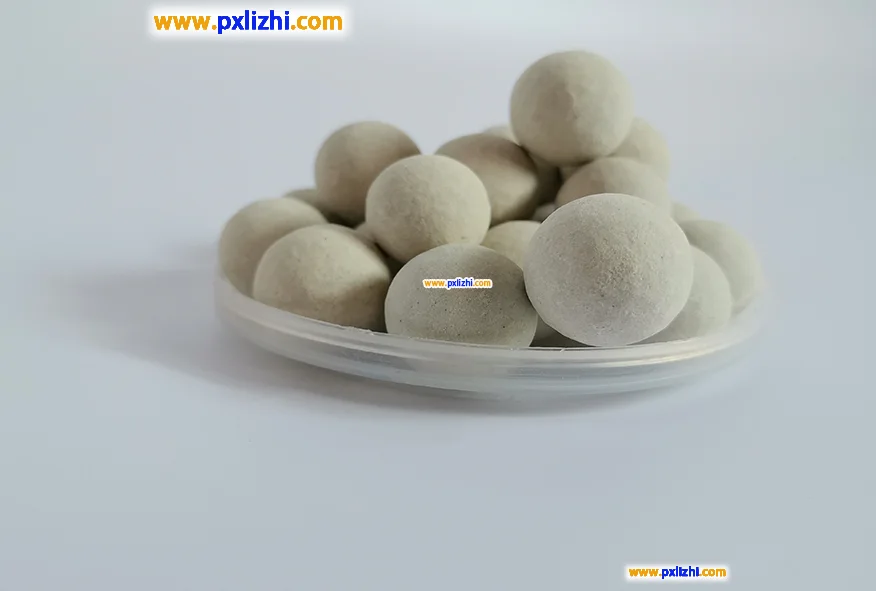
According to national standards such as GB/T 18845 – Industrial Ceramic Balls, inert ceramic balls are considered strength-qualified when the tested values meet the specified limits. For common inert ceramic balls (e.g. 92% / 95% alumina ceramic balls), the typical reference requirements are as follows:
● Compressive Strength
This is the most critical indicator, representing the axial load a single ceramic ball can withstand.
-
Small sizes (Ø3–Ø10 mm): ≥ 3000 N per ball
-
Large sizes (Ø13–Ø50 mm): ≥ 6000 N per ball
(Limits may vary slightly depending on material; low-alumina ceramic balls usually have lower requirements.)
● Abrasion Loss (Wear Rate)
This reflects wear resistance and long-term strength stability.
After rotation and friction in a standard abrasion tester:
-
Abrasion loss ≤ 0.05% is considered qualified
A higher abrasion rate indicates a higher risk of pulverization during operation.
● Impact Strength
After drop-impact testing:
-
No breakage and no visible cracks
This ensures resistance to damage during transportation, loading, and operation.
2. Visual Inspection for Quick Screening
(Incoming materials / on-site preliminary judgment — simple and intuitive)
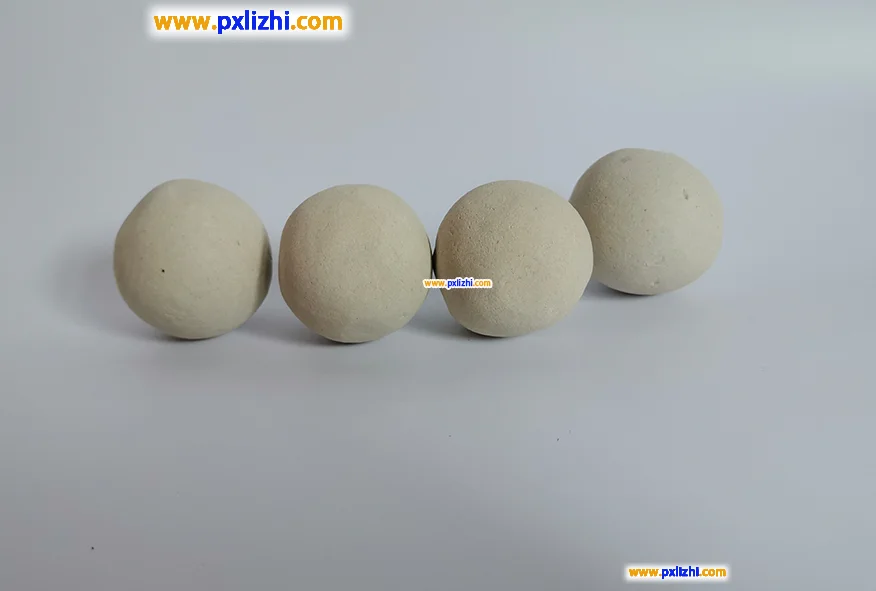
Randomly select samples from the batch. If no visible defects are found, the ceramic balls meet basic strength appearance requirements:
-
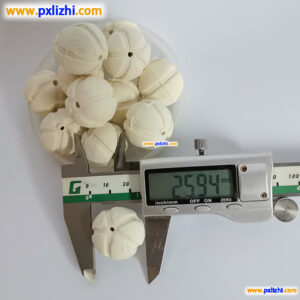
No surface cracks, chipping, delamination, bulging, or edge breakage
-
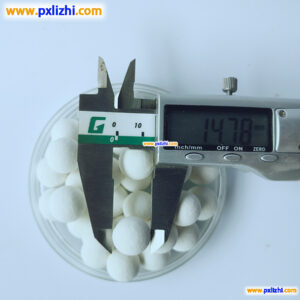
Uniform size within the same batch, no obvious deformation
-
No powder shedding or crumbly feeling when held or lightly tapped
-
Clear, crisp sound when lightly struck together
(A dull sound often indicates internal pores or layers, suggesting insufficient strength.)
3. On-Site Practical Testing Before Loading
(Fast verification aligned with real operating conditions)
● Stacking Compression Test
Stack several ceramic balls and apply moderate pressure (simulating actual bed loading conditions).
No cracking or breakage indicates acceptable strength.
● Drop Test
Roll or drop ceramic balls from a height of 1–2 meters onto a hard surface (concrete floor or steel plate).
No breakage or debris indicates good impact resistance.
Important Notes
-
Random sampling is required:
Sampling should be done by batch, with a quantity of no less than 0.01% of the total, and not fewer than 50 balls. -
Verify test reports:
For purchased ceramic balls, always request a third-party inspection report from the manufacturer.
Confirm key indicators such as compressive strength and abrasion loss. Products without qualified reports are not recommended. -
Match strength to operating conditions:
For high-pressure or high-flow reactors and distillation systems, high-alumina ceramic balls with higher compressive strength should be selected, with performance values exceeding basic standard limits.
Simple Conclusion
If inert ceramic balls have:
✔ Verified third-party test reports (compressive strength & abrasion loss qualified)
✔ No visible defects
✔ Passed basic on-site impact and compression tests
They can be confidently regarded as strength-qualified inert ceramic balls suitable for industrial use.

Reviews
There are no reviews yet.